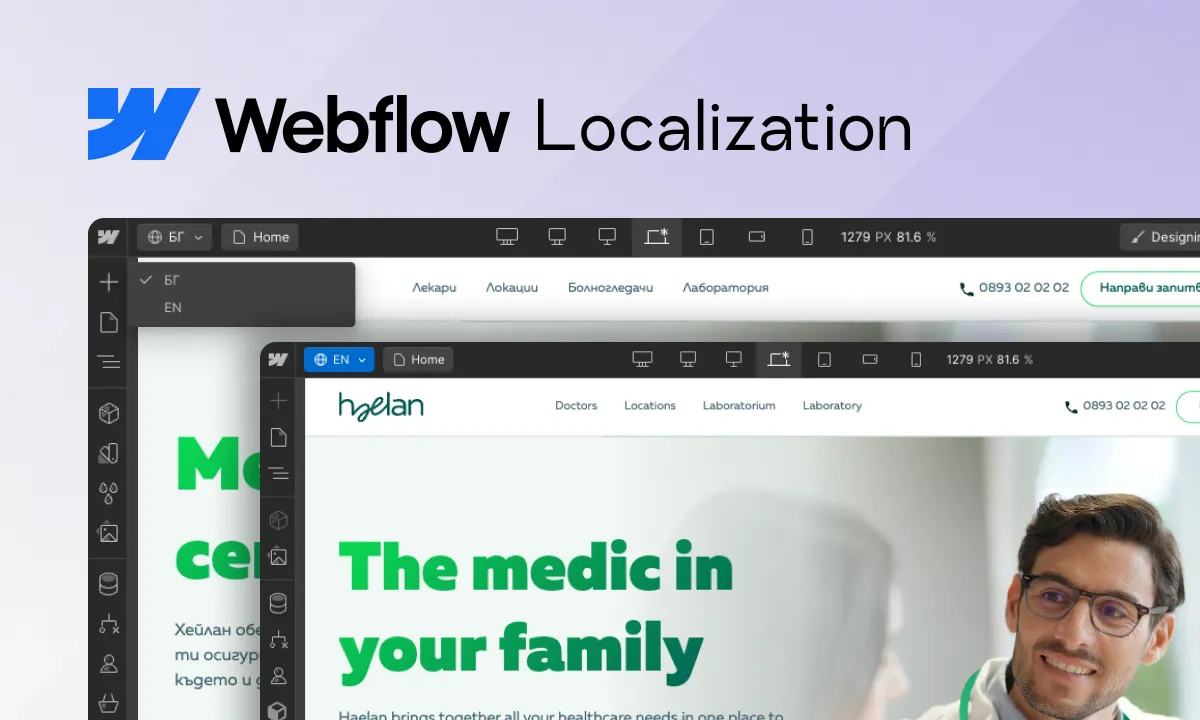
Webflow Localization is Webflow’s native way to create and manage multiple locales of the same website, so you can adapt language, region, design, and SEO settings without rebuilding everything. Translation is usually just swapping words.
Localization is translation plus making sure the experience still makes sense, converts, and ranks in each market.
For marketing teams, the difference is governance. In Webflow Localization, secondary locales inherit from the primary locale until you intentionally override content, styles, or assets for a specific locale. That “inherit then override” model is what makes webflow localization more than a one-off translation project.
This guide breaks down how to do it right, and how to outperform competitors who treat multilingual support as a plugin instead of a system.
What Is Webflow Localization And Why It Matters
Webflow localization is the structured adaptation of your website’s content, SEO framework, and user experience for multiple languages and regions using Webflow’s native capabilities and strategic architecture.
It goes far beyond swapping English text for Spanish or German.
Webflow Localization includes:
- Full static and dynamic content translation
- Localized CMS collections
- SEO metadata per locale
- Language-specific URLs
- Hreflang implementation
- Market-adapted messaging and imagery
- Region-aware conversion flows
Why it matters:
Google prioritizes:
- Clear user intent matching
- Content depth and contextual signals
- Helpful, experience-based information
- Clean technical SEO foundations
- Structured clarity for AI interpretation
Search engines and large language models increasingly evaluate multilingual sites independently per market.
If your localized pages feel thin, machine-translated, or structurally inconsistent, they won’t rank, no matter how strong your English domain authority is.
Localization is no longer a technical add-on, it’s an international growth engine.
For marketing leaders, pairing multilingual sites with a strong B2B sales funnel is key, check out our guide on How to Build a B2B Sales and Marketing Funnel That Drives Revenue to maximize conversions
Webflow Localization vs Weglot: Which Should You Use in 2026?
Choosing a multilingual solution depends on how much control you want, how often your site changes, and who manages translations. Here’s the simplest breakdown:
1️⃣ Webflow Localization
- Best for: long-term growth, B2B, or highly customized sites.
- Strengths: Full design and CMS control, content inheritance, automatic SEO signals (hreflang, sitemaps, language tags).
- Recent updates: Machine translation + TMS integrations make workflow faster.
2️⃣ Weglot (or similar tools)
- Best for: fast launches or small marketing teams.
- Strengths: Quick setup, centralized translation dashboard, good for non-designers or legacy sites.
- Trade-off: Less control over layout/design per language.
3️⃣ Manual Subfolders
- Best for: small sites with tight budgets.
- Drawback: Every update must be done separately for each language, creating maintenance headaches.
Bottom line:
- If your site updates often, needs design control, and SEO matters → Webflow Localization is usually the better choice.
- If you need speed and simplicity → Weglot works well.
- Budget-only or tiny sites → Manual subfolders can work but are harder to maintain.
How Do You Set Up Webflow Localization The Right Way From Day One?
Webflow’s localization interface is straightforward. The strategic decisions you make during setup are not.
If you’re a marketing director or brand manager planning international growth, treat localization setup as infrastructure, not a feature toggle.
Small configuration choices at this stage can determine whether your multilingual site scales cleanly or requires a costly rebuild later.
Here’s how to approach webflow localization correctly from the start.
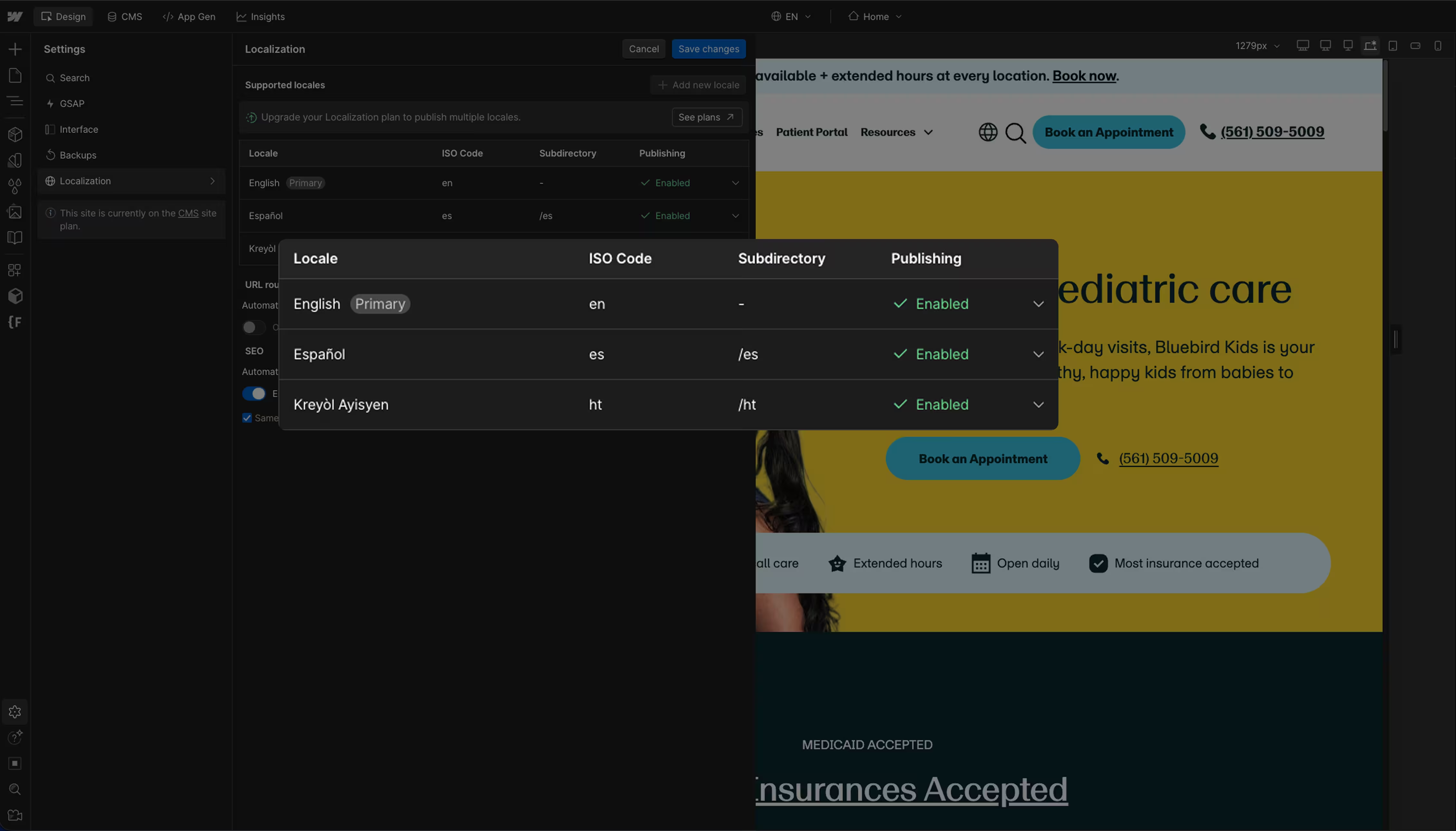
Step 1: Choose Your Primary Locale Like A Long-Term Investment
When you first enable Localization in Webflow (via Site Settings → Localization), you must create a primary locale.
This decision matters more than most teams realize.
- The primary locale becomes your structural “source of truth.”
- It cannot later be swapped with a secondary locale.
- Many layout rules, inheritance behaviors, and content limitations stem from it.
You can edit its language or country settings later, but its structural role remains fixed.

Choose the language that represents your long-term brand foundation, typically your main content production language and headquarters market.
If your global strategy may shift, decide carefully now. Reversing this later often means rebuilding.
Step 2: Add Secondary Locales With SEO And Routing In Mind
Next, create secondary locales. Each locale can be:
- Language-only (e.g., Spanish)
- Language + country (e.g., Spanish (Mexico))
This is where strategic nuance begins.
Browser Routing Behavior (Advanced Plans)
Webflow can auto-route users based on browser language preferences. However:
If you create only country-specific locales (like en-US and en-GB) and a visitor’s browser preference is simply “en” (language-only), Webflow may route them to the primary locale instead of the closest match.

Most competitors don’t explain this edge case. It matters.
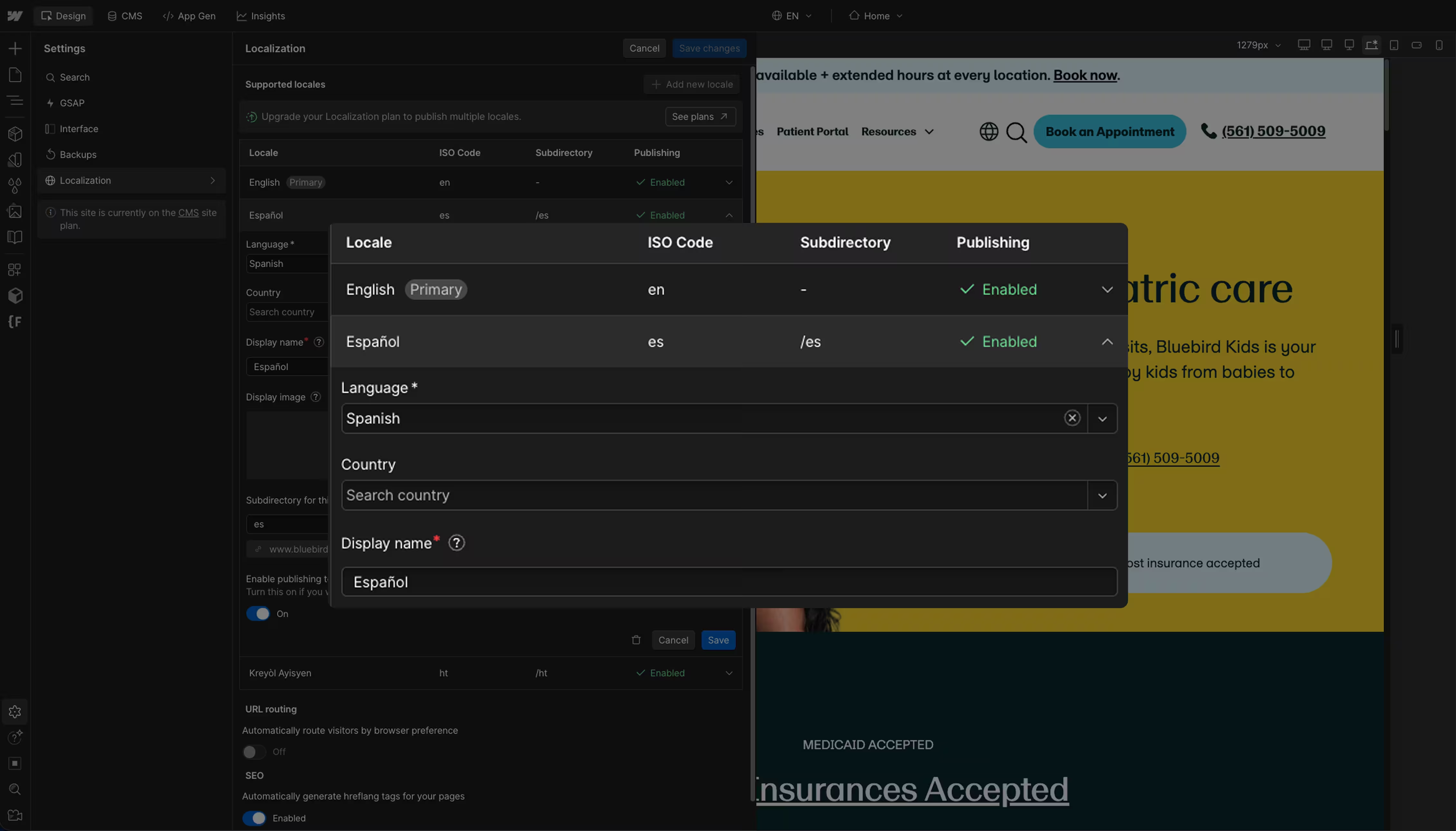
Step 3: Plan Subdirectories Before You Publish
Webflow assigns each locale a subdirectory:
- /es/
- /fr/
- /en-us/
This structure is powerful for SEO, but dangerous if poorly planned.
Important nuance:
Webflow prioritizes locale subdirectories over existing slugs.
If you already have:
- A CMS collection slug
- A page folder
- A static page
that matches your locale path (for example /en/),
the locale will override it, and the original content will return a 404 error.
This mistake often goes unnoticed until after launch.
- Audit existing URL structures before adding locales.
- Reserve clean, conflict-free subdirectories for languages.
- Think two years ahead — not just launch day.
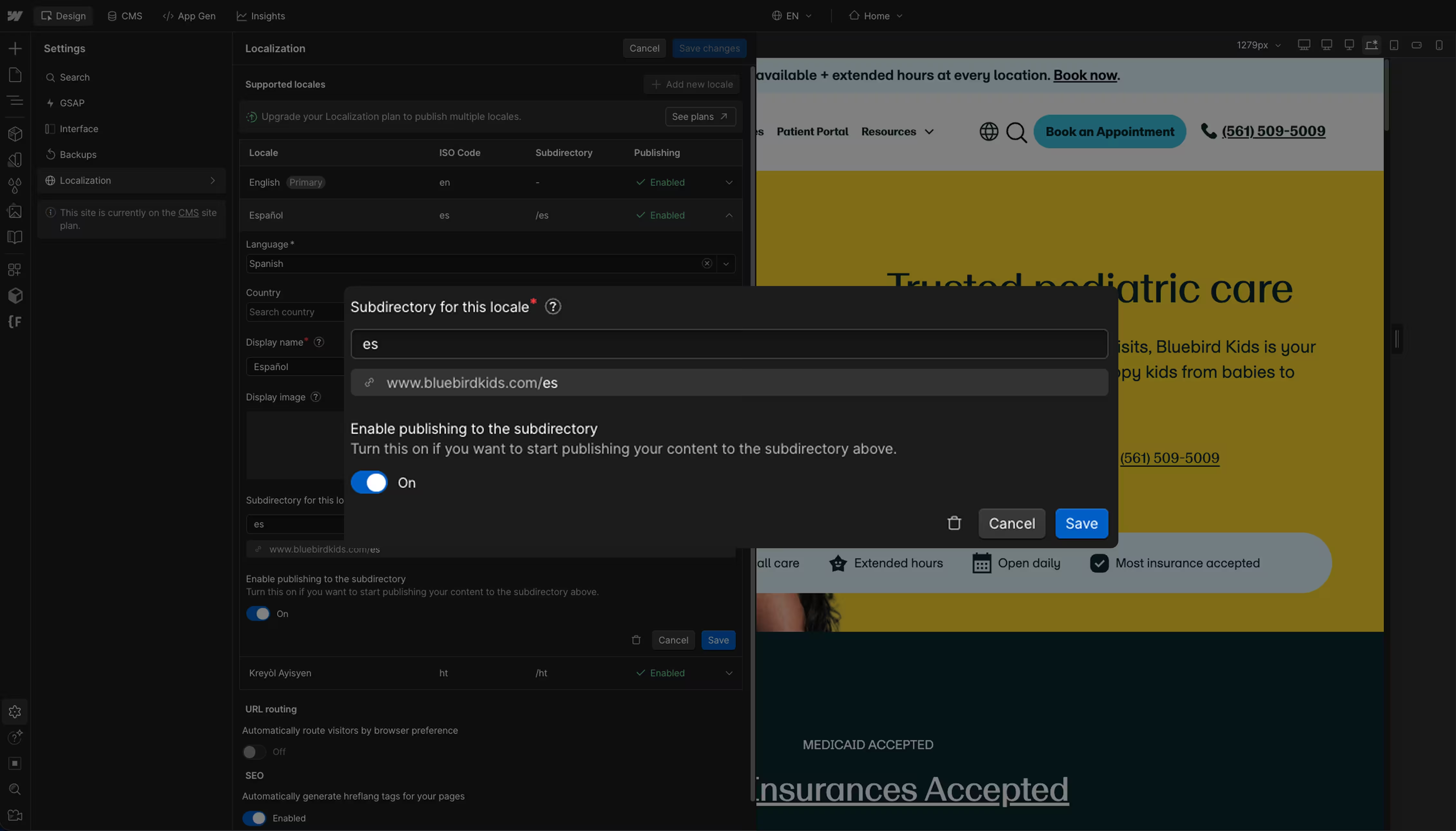
Step 4: Understand Publishing And Governance Implications
Webflow allows previewing localized content before publishing. To publish secondary locales live, you must activate a Localization add-on plan appropriate for your needs (routing, asset overrides, etc.).
But publishing isn’t the real challenge.
Governance is.
Ask:
- Who owns translations?
- Will all blog posts be translated?
- How will updates sync across languages?
- How will legal pages stay compliant per region?
- How will performance be tracked per locale?
Localization multiplies operational complexity. Plan workflows before scale.
Step 5: Consider RTL (Right-To-Left) Languages Early
If you plan to expand into markets using right-to-left scripts (Arabic, Hebrew, Persian, Urdu, Yiddish), Webflow supports RTL behavior automatically on published sites.
However:
- Test layouts thoroughly.
- Adjust directional attributes (dir="ltr" or dir="auto") where necessary.
- Validate form behavior and navigation clarity.
RTL support is powerful but only when properly QA’d.
Which Languages and Regions Does Webflow Localization Support?
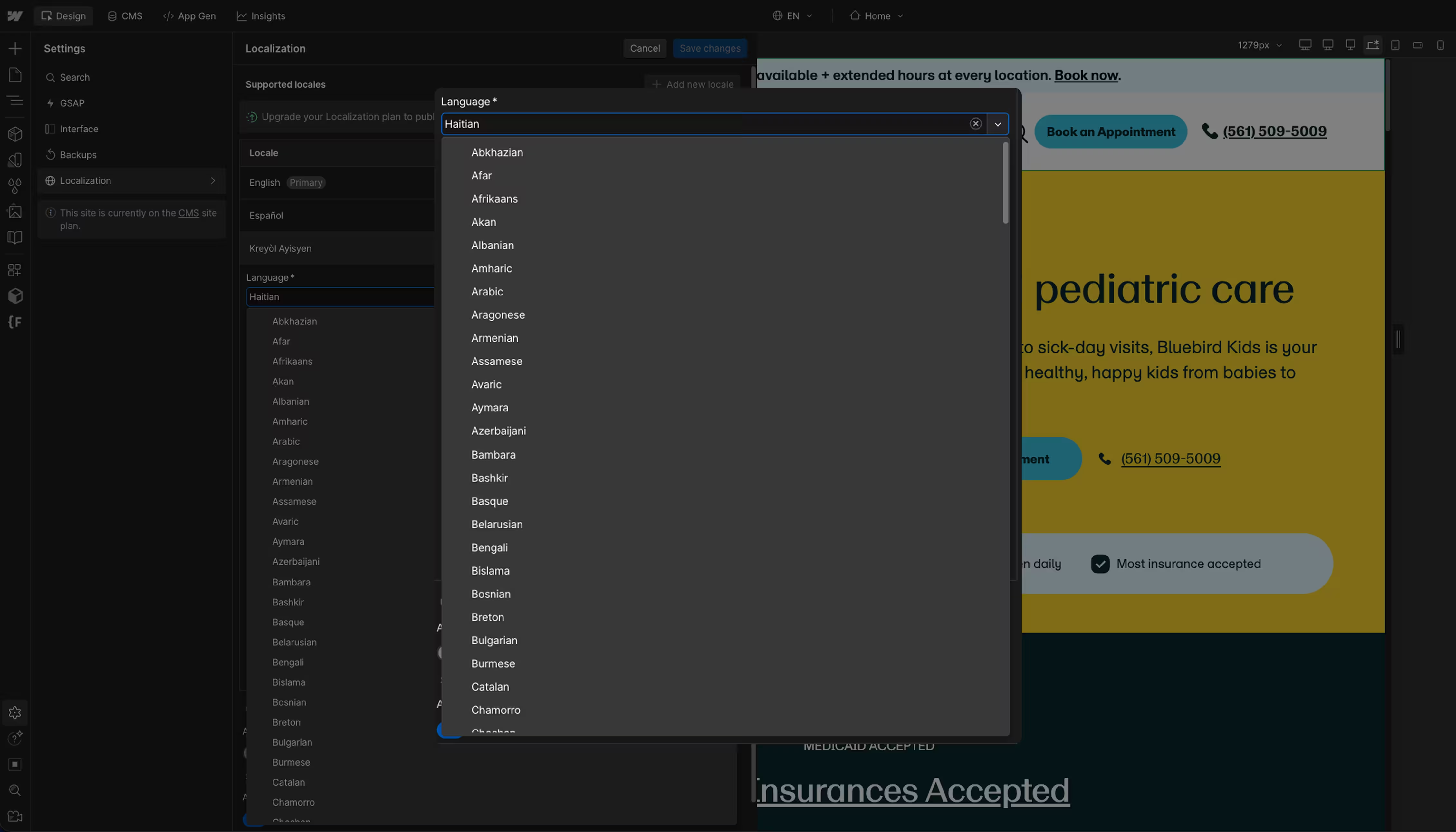
Webflow can handle over 100 languages and different regions.
- Right-to-left languages (like Arabic or Hebrew) automatically flip the layout.
- You can choose just the language (like English) or a specific region (like U.S. English en-US) to adjust things like dates, currency, or wording.
What Are Webflow’s Current Localization Limitations You Need To Know?
Webflow Localization is powerful, but there are a few key limits to plan for:
- Some features are still improving, and official docs may call parts “beta.”
- Not compatible with Webflow Ecommerce, if you need a multilingual store, plan ahead.
- Primary locale can’t be changed later, so pick your main language carefully.
- Locale routing is fixed: automatic domain redirects (302) can’t be overridden.
How Do You Plan A Webflow Multi Language Rollout Without Wasting Budget?
Don’t translate everything at once, focus on what drives revenue and trust first.
Smart rollout steps:
- Priority pages – Product, pricing, demos, top landing pages.
- Trust pages – Case studies, testimonials, security/privacy info.
- Content expansion – Blogs, regional resources, support pages.
This way, you measure success by conversions and impact, not just page count.
To turn those localized pages into real business results, see our guide on How To Generate & Capture More Qualified B2B Leads On Your Website.
How Do You Translate Static Pages and CMS Content at Scale?
When you add languages, layouts can break - headlines get longer, buttons wrap, and menus overflow. Here’s a practical way to handle it:
1️. Translate Smartly
- Use machine translation first, then human editing to keep your brand voice and intent.
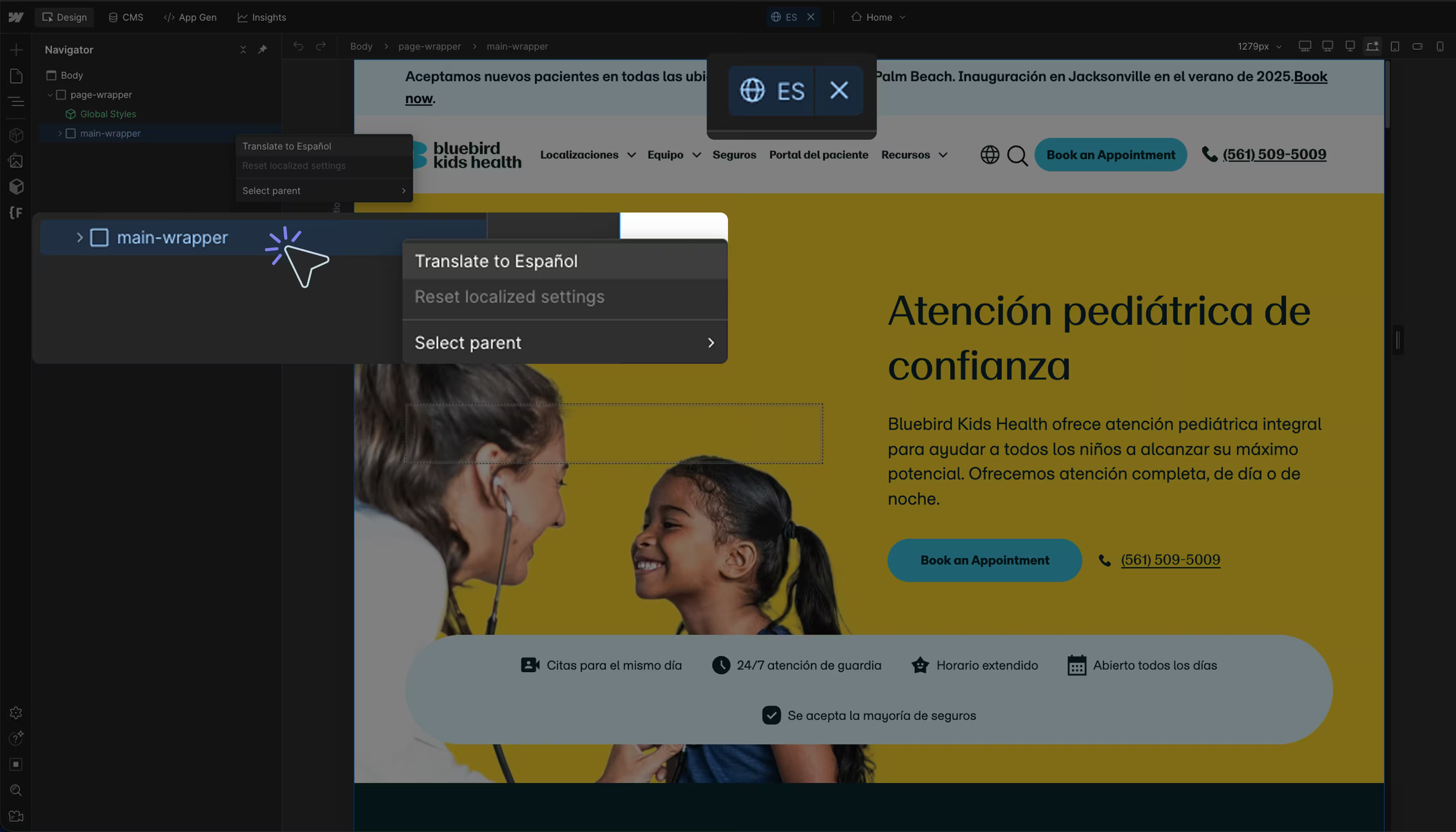
- Review every key page in the locale view, checking headings, navigation, cards, and CTAs.
2. Go Beyond Text
- Localize images, alt text, legal notices, and element visibility.
- Adjust typography or spacing for each language so the site feels natural.
3. CMS Content
- CMS structure stays the same across languages.
- Each locale can have its own content; secondary locales inherit from the primary until overridden.
- Decide what should change (headlines, body copy, SEO fields, CTA labels, localized proof) and what stays the same (product names, core features, “do not translate” terms).
✅ This approach keeps your multilingual site consistent, scalable, and professional.
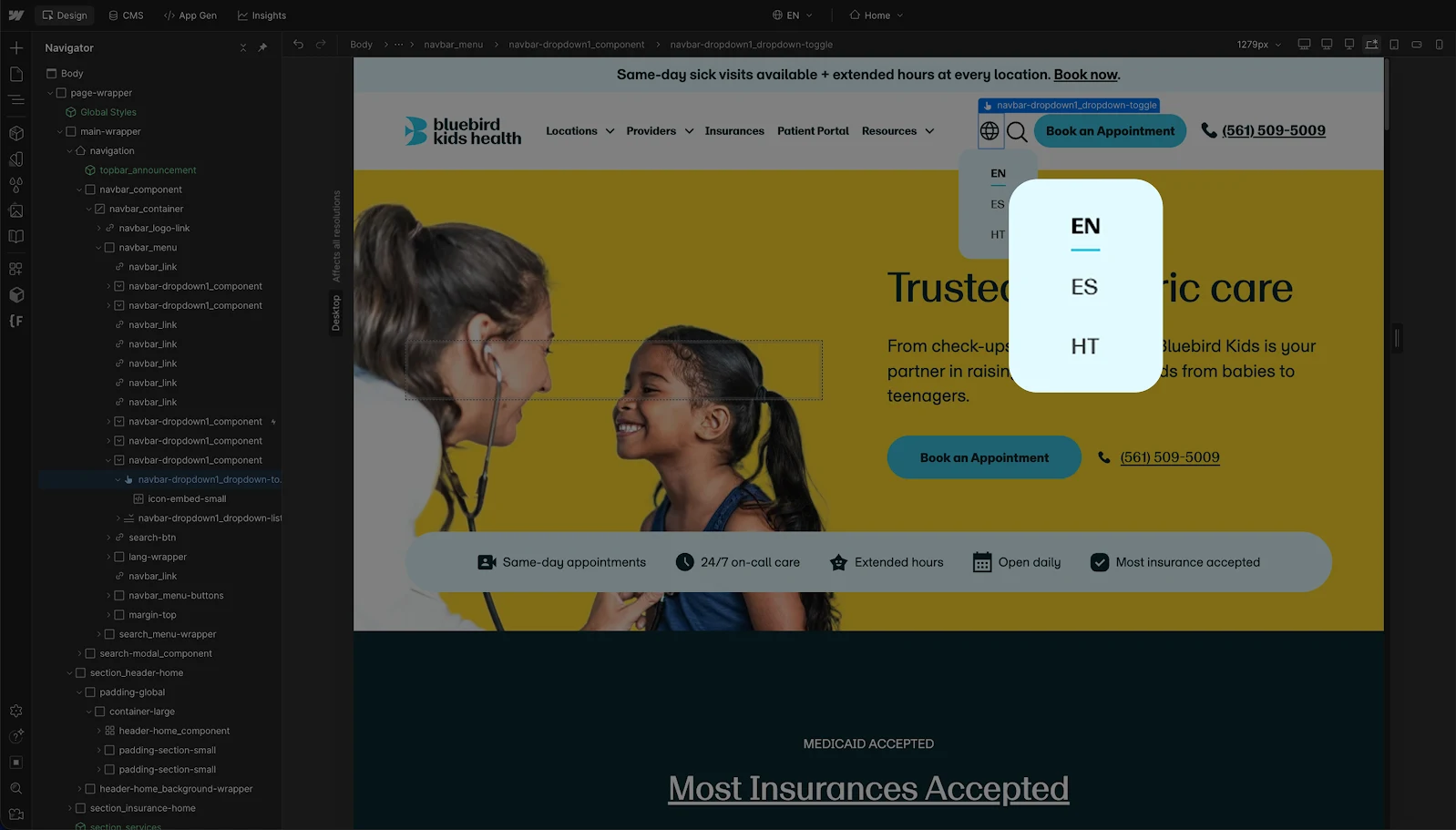
How Do You Build A Language Switcher In Webflow That’s Actually Usable?
A language switcher is navigation, not decoration, it helps users pick the right language and improves conversions.
How to set it up in Webflow:
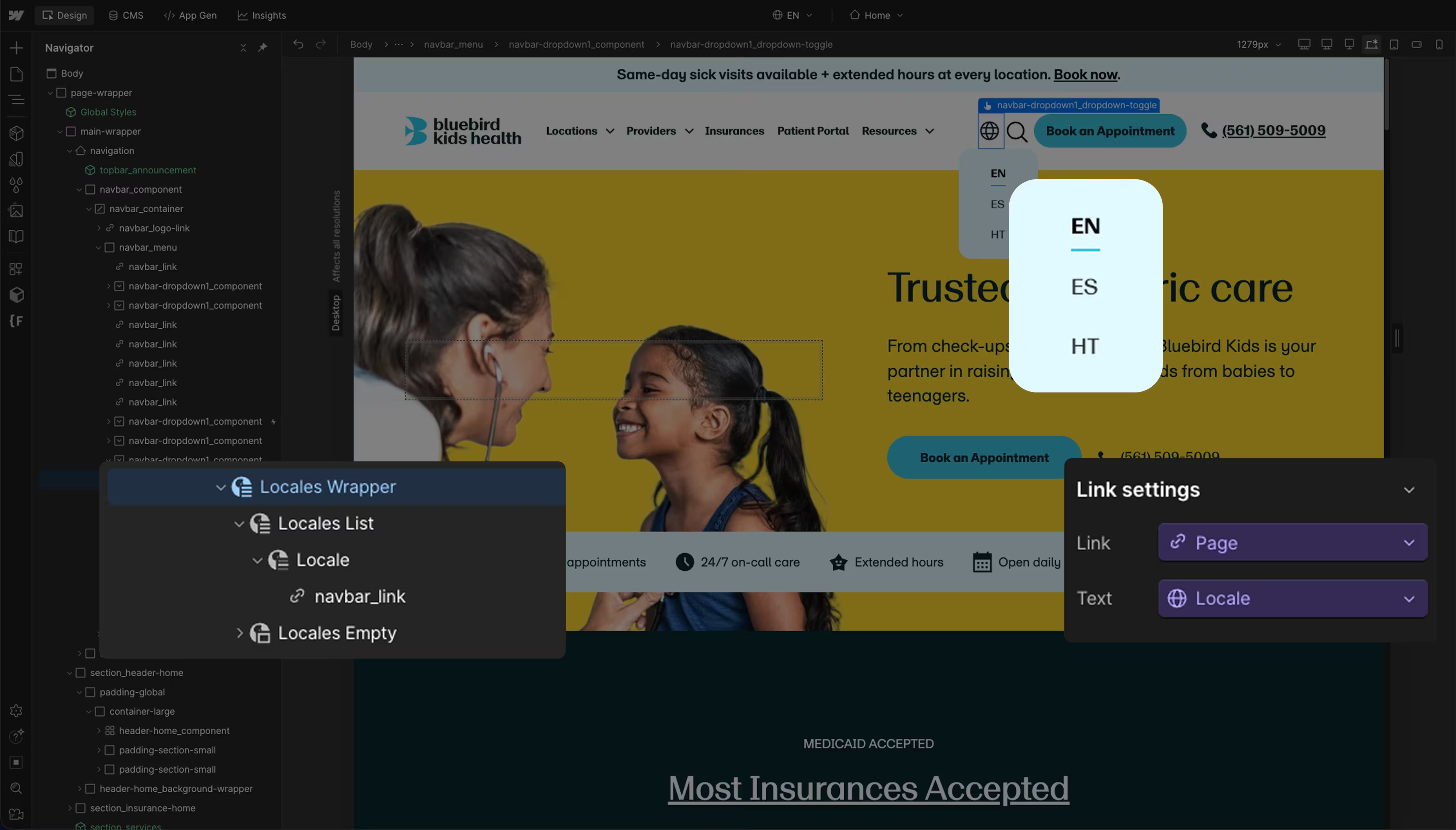
- Use a Dropdown for the switcher.
- Add the Locales list inside the dropdown - it only shows published languages.
- Label each item clearly for your audience (e.g., “English” or “Español”).
- Link the dropdown toggle to Current Locale so the active language shows automatically.
How Do You Maintain SEO When Translating A Webflow Site?
International SEO often fails when teams skip the details. Webflow handles some parts automatically, but you still need a plan.
What Webflow Does Automatically:
- Sets the HTML lang attribute per locale.
- Adds hreflang tags in the page head and sitemap for published pages.
What You Need to Do:
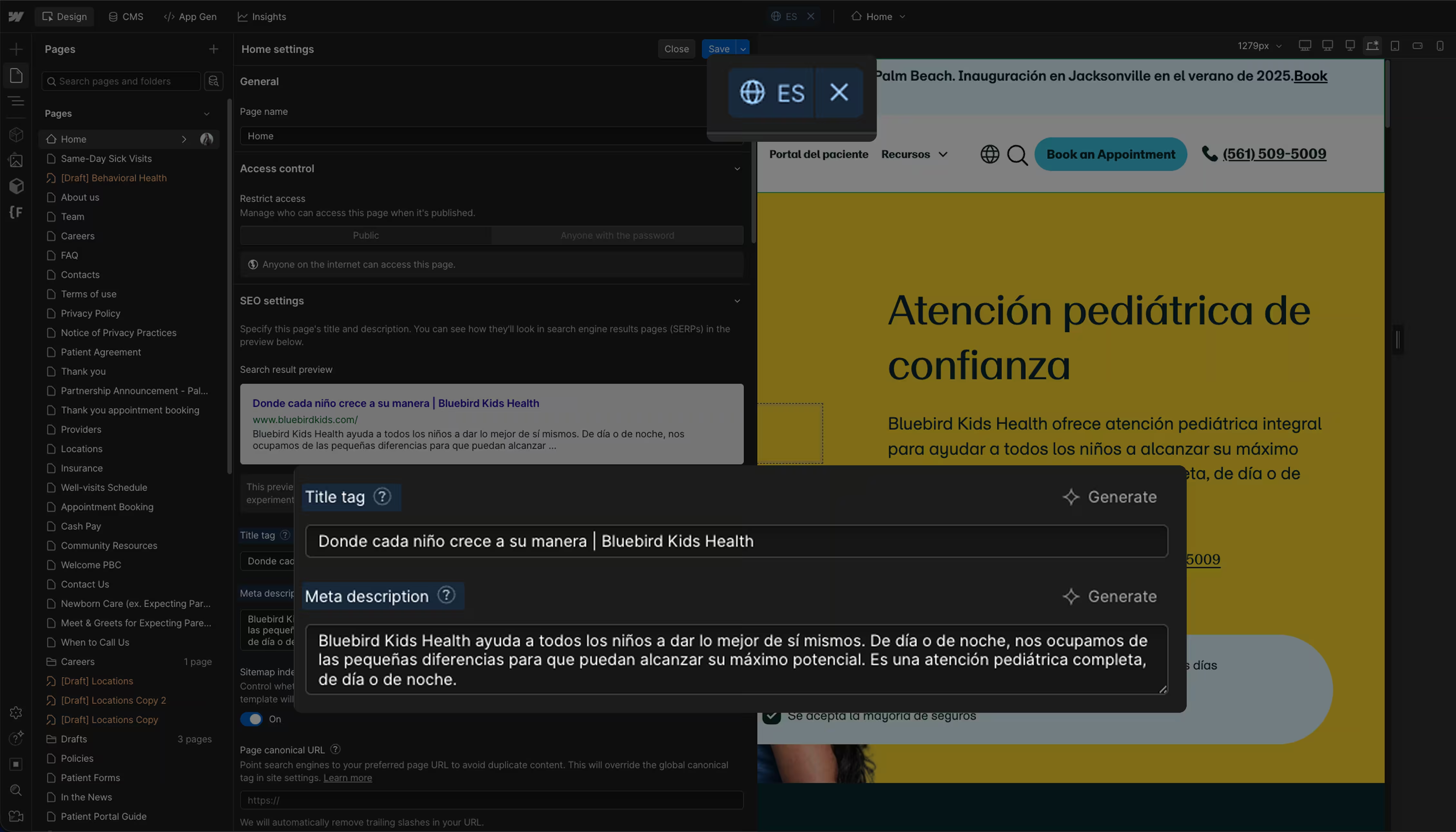
- Translate metadata – Rewrite meta titles and descriptions for each market.
- Manage redirects – 301 redirects for English pages don’t automatically cover localized paths.
- Check internal links – Use Webflow page/collection links instead of pasted URLs to keep locale routing correct.
Pre-Publish SEO Checklist:
- Confirm all locales appear in the sitemap.
- Spot-check hreflang on key pages.
- Validate slugs, titles, and descriptions for each locale.
- Crawl subdirectories to find 404s and redirect issues.
- Ensure nav and footer links go to the correct locale pages.
✅ Following this keeps your translated site SEO-friendly and avoids common pitfalls.
What Common Webflow Localization Mistakes Cause Traffic Drops?
Most traffic drops come from predictable, fixable mistakes.
Avoid these:
- Choosing the wrong primary locale and realizing it after launch
- Creating locale subdirectory slugs that collide with existing pages, folders, or CMS collection slugs
- Translating pages but not publishing the locale, so Google cannot find the localized content
- Using pasted URLs for internal links, which can break expected locale routing behavior
- Assuming redirects automatically cover every locale path
- Shipping machine translations without a brand glossary and a human review
If you dodge those, you are already in the top percentile of multilingual site launches. The bar is low. We can step over it.
What Does A High-Quality Webflow Localization Workflow Look Like For Marketing Teams?
A good workflow keeps your brand consistent, reduces mistakes, and makes localization predictable.
Steps for a repeatable workflow:
- Define ownership – Marketing handles messaging, product handles terminology, legal handles claims.
- Decide what changes by market – Identify which content is localized vs. stays the same.
- QA before publishing – Check layouts, links, forms, metadata, sitemap, hreflang tags, and redirects.
- Measure results per locale – Track Search Console metrics, conversion rates, and lead quality.
- Optional for Enterprise users – Use a CSV glossary for machine translations to control key terms, but always review before publishing.
✅ This ensures your multilingual site is accurate, consistent, and efficient.
How Does Webflow Localization Support AI Search and Answer Engine Optimization (AEO) in 2026?
Webflow Localization helps your multilingual content be properly interpreted by AI-driven search and answer engines. Localized pages feed Google AI Overviews and summaries independently, which means each market can rank on its own merit.
Focus on per-locale helpful content, contextual depth, and structured data like localized FAQ schema. Native localization gives cleaner signals than proxy translations or overlays, aligning with Google’s helpful content updates that reward market-specific intent.
For businesses looking to maximize AI-driven search performance, check out our list of the Best Webflow AEO/GEO Agencies Optimizing for AI search.
How Do Branching and Components Work with Webflow Localization in 2026+?
Recent improvements allow teams to detect changes across locales, sync content from the primary locale, and resolve conflicts in branches before publishing.
This is ideal for global rollouts, staging, and collaborative workflows, ensuring that developers and marketers can safely make updates without breaking content in other locales.
Components now maintain consistency across locales while still allowing locale-specific overrides.
What Are the Current Webflow Localization Pricing and Plan Details in 2026?
Webflow Localization is a powerful native add-on that lets you create truly global, SEO-optimized multilingual sites without third-party hacks.
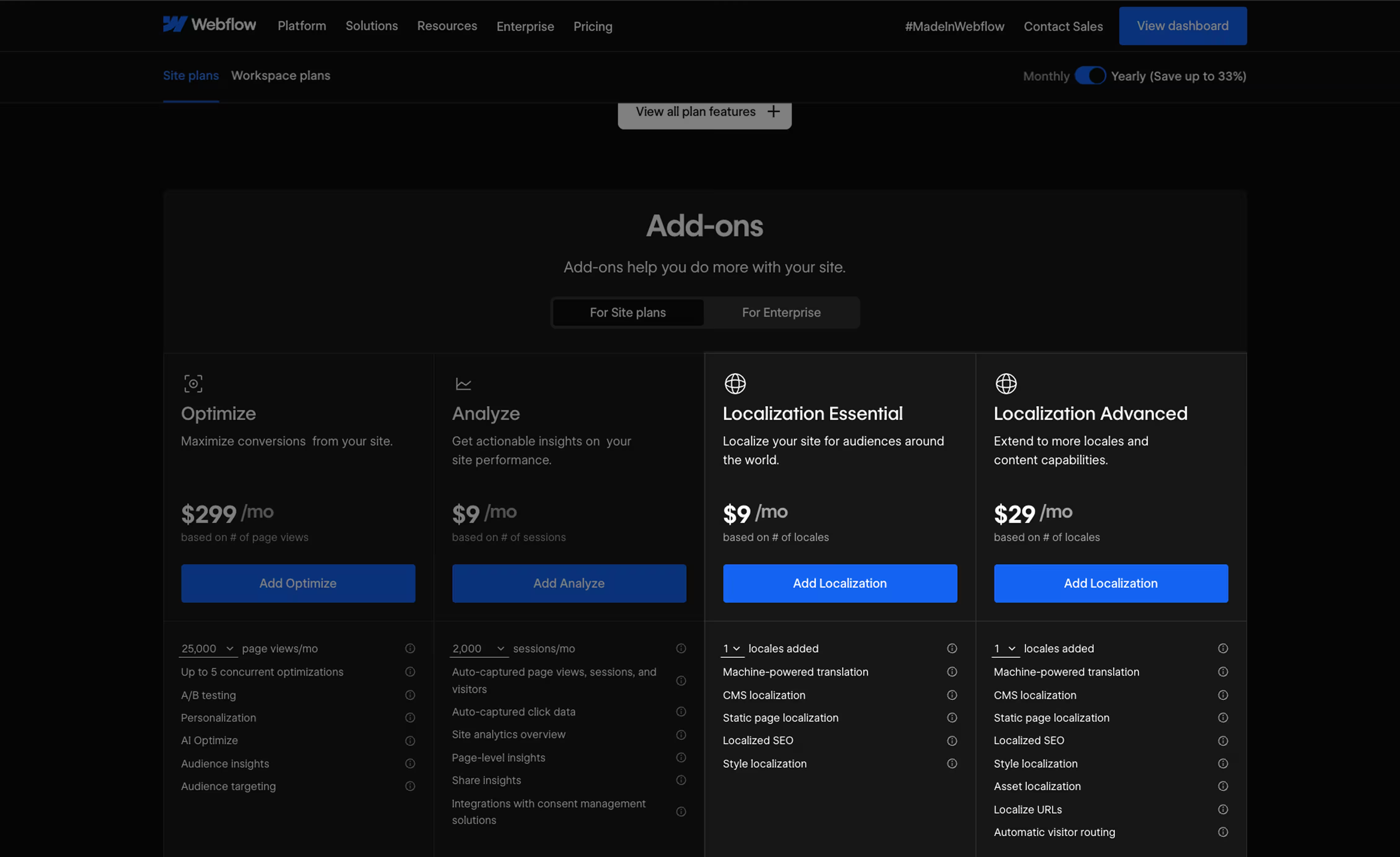
It starts with a free preview available on any Site plan (Starter through Enterprise), giving you full access to machine-powered translation, static page localization, CMS item translation, and SEO field edits in Locale view, so you can plan, test, and preview changes risk-free.
You only pay when you're ready to publish secondary locales live (or enable publishing for the primary locale in subdirectories).
To publish secondary locales, add overrides (styles, assets, URLs), or unlock advanced features like automatic visitor routing, add the Localization add-on to a paid Site plan (Basic, CMS, Business, or Enterprise required, not available on Ecommerce sites, as Ecommerce products/categories/pages can't be localized).
Pricing is based on the number of locales added (each language or language+region counts as one), billed monthly ("/mo" rates shown), with potential annual savings not explicitly detailed for this add-on. Here's the current 2026 breakdown directly from Webflow's pricing page:
- Localization Essential - $9/mo based on # of locales Ideal for startups or smaller expansions. Includes: machine-powered translation, CMS localization, static page localization, localized SEO (titles, descriptions, hreflang, lang tags), and style localization. Supports basic publishing in subdirectories—great for testing 2–3 markets without heavy customization.
- Localization Advanced - $29/mo based on # of locales Built for serious global scaling. Includes everything in Essential, plus: asset localization (images, alt text per locale), localized URLs/slugs, and automatic domain-level browser routing (302 redirects based on visitor language preferences). Delivers stronger independent per-market ranking, conversions, and UX for B2B or multi-regional brands.
- Localization Enterprise - Custom pricing (contact Webflow sales) For high-volume teams or complex operations. Includes all Advanced features, plus: custom number of locales, custom element visibility, draft locale-specific static pages, enterprise scale, deeper integrations (e.g., TMS/APIs), and dedicated support. Best when you need maximum flexibility and brand consistency at scale.
Quick upgrade guide for marketers
- Free preview → Prototype, translate, and strategize without cost.
- Essential ($9/mo base) → Launch basic multilingual sites affordably (e.g., 2–3 languages).
- Advanced ($29/mo base) → Scale with full design/SEO control, asset overrides, and auto-routing for better global UX.
- Enterprise → Custom for unlimited locales, glossaries (via Enterprise features), APIs, and team-scale operations.
The add-on stacks on your base Site plan (e.g., a CMS plan + Advanced Localization for several locales adds the per-locale cost).
No hard locale limits are officially specified (e.g., "up to 3" or "up to 10" appear in some third-party reports but not on Webflow.com/pricing or help docs, it's flexible based on # of locales added).
Features like custom glossaries are available in Enterprise scale but not always listed as tier-exclusive in core docs.
Always verify exact current rates and any updates on Webflow's official pricing page (webflow.com/pricing → Add-ons → Localization section), as details can evolve.
Investing in native Localization beats overlays like Weglot for cleaner SEO signals, visual control, and long-term international growth.
How Can Creative Corner Help You Launch Webflow Localization Faster And Safer?
Webflow localization is not a “translate button.” It touches UX, SEO, brand, and operations, which is exactly where launches get expensive when teams wing it.
Creative Corner Studio is a Webflow agency that helps teams plan and launch multilingual Webflow sites with a strategy-first approach.
That includes picking the right locale architecture, building scalable CMS structures, designing language-aware components, setting SEO guardrails (hreflang, sitemaps, slugs, redirects), and running QA so you do not trade global growth for a traffic drop.
Creative Corner is a certified Webflow partner with deep delivery experience (including multi-language expansions and large migrations), so we can support the full cycle from planning to implementation to ongoing optimization as your markets grow.